Qualitative research does not aim for a large, statistically representative sample. It aims for the right participants — people who can speak meaningfully about the topic. This is called purposive sampling.
Common sampling strategies include:
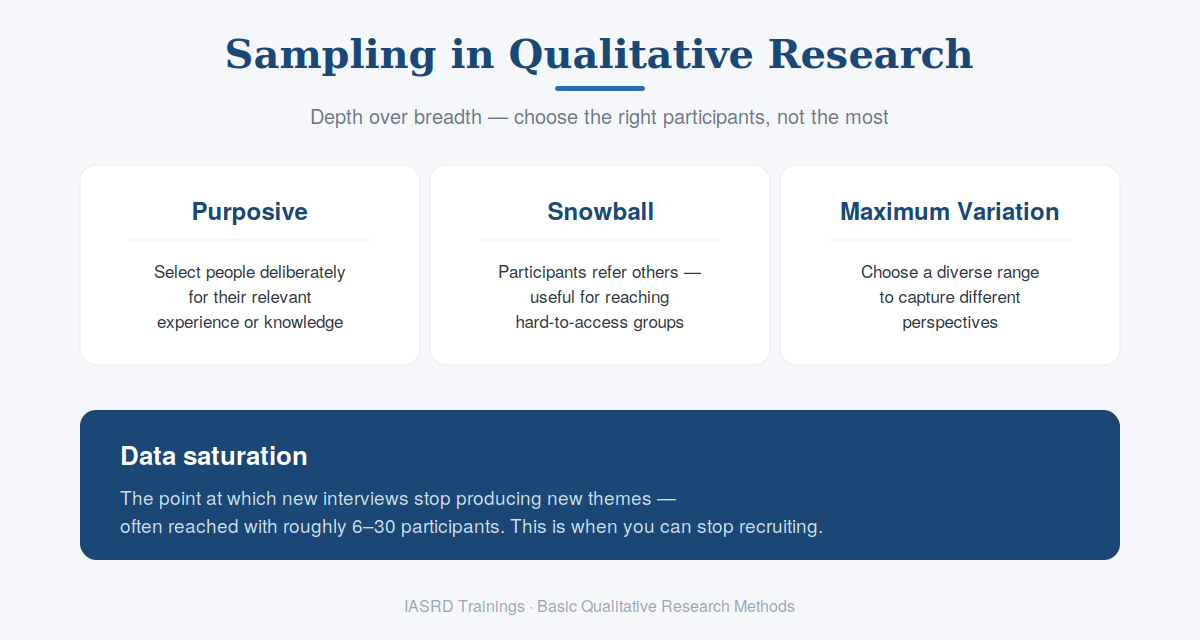
Purposive sampling — selecting participants deliberately because they have relevant experience or knowledge.
Snowball sampling — asking existing participants to refer others, useful for reaching hard-to-access groups.
Maximum variation sampling — deliberately choosing a diverse range of participants to capture different perspectives.
Sample sizes are usually small — often between six and thirty participants — because the goal is depth, not breadth. Researchers often continue recruiting until they reach data saturation: the point at which new interviews stop producing new themes.
What matters is not how many people you include, but whether they can give you rich, relevant insight into your question.
Key idea: In qualitative research, relevance and depth matter more than sample size.