Thematic analysis is the most widely used method for making sense of qualitative data. It identifies patterns of meaning — themes — across a dataset. A common approach follows six phases.
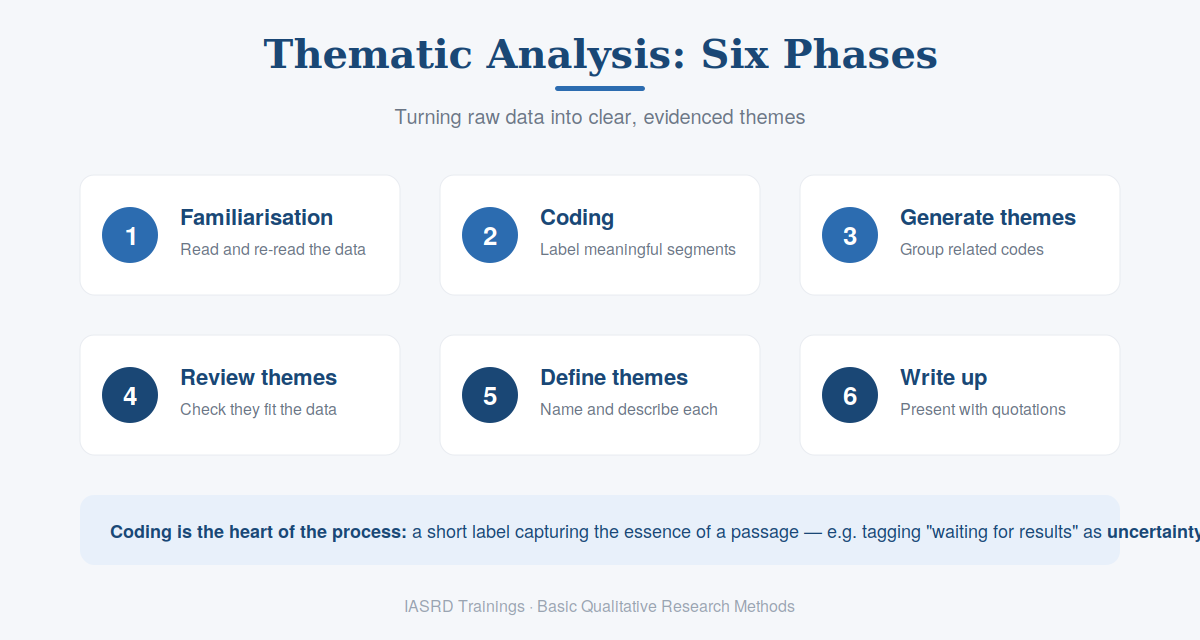
1. Familiarisation — read and re-read the data until you know it well.
2. Coding — label meaningful segments of text with short descriptive codes.
3. Generating themes — group related codes into broader themes.
4. Reviewing themes — check that themes fit the data and are distinct from one another.
5. Defining themes — name each theme clearly and describe what it captures.
6. Writing up — present the themes with supporting quotations from participants.
Coding is the heart of the process. A code is a short label capturing the essence of a piece of text — for example, tagging an interview passage about waiting for results as “uncertainty.” As codes accumulate, patterns emerge and are organised into themes that answer the research question.
Thematic analysis is flexible and accessible, which makes it an ideal starting point for those new to qualitative analysis.
Key idea: Thematic analysis turns raw data into clear, evidenced themes.